PART 4 · THE WAY FORWARD
The Artist's Method: A Return to Roots
It has withered because the profession systematically surrendered its moral imagination.
The American planning profession stands today amid a quiet, self-inflicted institutional ruin. The crisis that paralyzes contemporary practice is not born of a deficiency in technical skill, a shortage of sophisticated computational models, or an absence of statutory authority. It has not withered because local governments lack access to geospatial information systems, origin-destination transit analytics, or detailed matrices of capital depreciation. It has withered because the profession systematically surrendered its moral imagination. Over the course of the late twentieth century, chastened by the catastrophic social consequences and physical violence of mid-century clearance, the discipline chose to retreat into the sterile, defensive shelter of administrative procedure. Terrified of making another consequential mistake on the grand stage of the city, planners surrendered their historical birthright as visionaries and builders. We cast aside the mantle of leadership, chose the passive comfort of the regulatory clerk, and constructed an elaborate procedural fortress designed primarily to manage liability, deflect controversy, and enforce mechanical compliance.
The Planner and the Calling of Civic Craft
The modern municipal landscape reflects the tragedy of this retreat. In city halls across the nation, thousands of dedicated public servants find themselves trapped within an administrative machine that compiles massive, encyclopedic planning documents that satisfy every statutory checklist yet sit entirely unread on municipal shelves. These reports are monuments to procedural diligence and graveyards of civic aspiration. They are dense with data, exhaustively vetted through endless hearings, and utterly devoid of life, passion, or operational consequence. While these documents accumulate dust, the actual city fractures. The living communities entrusted to our stewardship suffer under an affordability crisis that drives the working class beyond regional borders, a fragmented transit infrastructure that strands the transit-dependent in daily cycles of exhaustion, and an epidemic of civic cynicism that views local government not as an instrument of shared purpose, but as an opaque bureaucratic obstacle. Public administration and legal scholars have described the costs of this thicket of defensive rules: the "administrative burden" that procedures impose on the very people public programs are meant to serve, and a "procedure fetish" that can weaken government's capacity to act (Herd and Moynihan, 2018; Bagley, 2019).
To lead our cities out of this long twilight, we do not require another imported management trend from corporate consulting, another proprietary software dashboard that promises to automate spatial decision-making, or an even more convoluted series of procedural checkpoints. We must perform a far more radical and courageous act: we must reclaim the forgotten soul of the discipline. We must recover the lost art of the plan.
When we speak of planning as an art, we are not issuing a call for superficial beautification, nor are we advocating for the autocratic egoism of the master architect who treats the living city as a blank canvas for personal vanity. We are invoking the deep, demanding discipline of civic craft. We are calling for the recovery of phronesis, that classical form of practical moral wisdom that Aristotle recognized as the indispensable virtue of civic stewardship. The practitioner of civic craft approaches the urban organism not as an inert piece of machinery to be tuned by detached technocrats, but as an intricate, fragile, and living civic body. That civic body cannot be understood through statistical abstraction alone. It must be apprehended through patient, humble observation, grasped through moral empathy, synthesized through systemic intuition, and shaped through the courageous willingness to act directly in the world. This phronetic approach to social science, applied to planning, holds that because power often shapes what counts as technical rationality, the civic practitioner must combine empirical rigor with value-rational judgment, asking who gains and who loses in the shaping of the city (Flyvbjerg, Landman, and Schram, 2012).
We are invoking the deep, demanding discipline of civic craft.
The foundational pioneers of American planning, despite their profound philosophical differences and historical errors, understood this reality intuitively. When Daniel Burnham looked upon the industrial squalor and chaotic rail yards of turn-of-the-century Chicago, he did not respond with an incremental zoning amendment or a timid policy memo. He mobilized the civic imagination through the persuasive power of artistic synthesis, creating a unified vision of lakefront parks, civic centers, and regional boulevards that dared the city to believe in its own dignity. When Benjamin Marsh, Jacob Riis, and the early social reformers descended into the sunless depths of Manhattan’s dumbbell tenements, they did not hide behind the illusion of value-neutral technocracy. They bore witness. They took the revolutionary power of the camera and the written word into foul, unventilated airshafts and exposed the raw human cost of speculative greed, demanding justice for the immigrant families whose labor fueled the nation’s industrial might.
Burnham and Marsh occupied opposite poles of the nascent profession, one reaching for monumental order, the other fighting for redistributive justice, yet both practiced an art of the civic whole. They shared an underlying conviction that the city was an indivisible organism, and that the planner’s highest duty was to confront that organism in its entirety. The tragedy of the twentieth century was that the profession severed these twin impulses, casting aside the moral fire of the reformer and perverting the grand vision of the builder into the blunt, destructive instruments of Title I clearance and urban expressways. Chastened by the devastation that followed, we abandoned both art and justice, settling for the safety of administrative management.
To move forward, therefore, planning must first go back. It must return to the foundational truths that made the discipline vital at its birth. Planning succeeded when it was unapologetically human-centered—when it measured its worth not by the volume of permits processed or the mathematical elegance of its models, but by its capacity to relieve the daily burdens of the human condition. It succeeded when it was genuinely comprehensive, refusing to sever housing from transportation, land use from parks, or zoning from public health, treating them instead as inseparable instruments of a single civic composition. And it succeeded when the planner stood as a creative synthesizer and builder rather than a technocratic regulator. The Artist’s Method is not a new ideology; it is the recovery of this original, integrated inheritance.
Reclaiming the lost art of the plan requires us to dismantle this administrative fortress and reconstruct our practice upon four enduring pillars of civic craft: the discipline of witness, the art of moral synthesis, the courage to test, and the quiet discipline of institutional memory. Together, these disciplines form the foundation of a new operating model: an operational framework we call the Artist’s Method.
The Discipline of Witness: From Detached Analyst to Civic Neighbor
The primary methodological failing of twentieth-century planning was its obsession with detachment. In its desperate quest for professional legitimacy and academic prestige, the field aligned itself with the positivistic social sciences, adopting the premise that truth can only be found in that which can be counted, graphed, and objectively measured. The university planning departments of the post-war era systematically stripped the human element from the curriculum, replacing the reflective studio with the econometrics lab and training a generation of planners to view the city from a clinical, aerial distance. The planner became an urban physician who diagnosed pathologies from afar, studying the city’s anatomy through the cold medium of the census tract, the land-use polygon, and the traffic-count model.
This analytical detachment was hailed as an intellectual triumph, the proof that planning had finally matured into a hard, rigorous science. In truth, it was an intellectual lobotomy. By deciding that only quantifiable data constituted legitimate evidence, the profession blinded itself to the very essence of urban life. The city is not a mathematical equation waiting to be solved; it is an intricate web of human souls striving for dignity, security, and connection. The most vital, consequential truths of an urban neighborhood do not reveal themselves on an administrative dashboard. Even in an age of algorithmic governance and urban sensor networks, data is never a neutral reflection of reality; without the witness of lived neighborhood knowledge, municipal dashboards can automate historical blind spots (Mattern, 2021; D'Ignazio and Klein, 2020).
A municipal spreadsheet can tell you precisely how many passengers board the cross-town bus line at six o’clock in the morning. It can record average dwell times, calculate vehicle headways, and project farebox recovery ratios. But that spreadsheet is entirely blind to the human drama unfolding on the platform. It cannot measure the quiet panic of the line cook standing in the freezing rain, eyes fixed on a cracked smartphone screen, calculating whether a ten-minute transit delay will cost a job, a week's wages, and the ability to pay the landlord at the end of the month. A housing needs assessment can categorize housing units by age, square footage, and median rent burdens with impeccable statistical precision. But it remains deaf to the quiet heartbreak of an elderly widow who watches her neighborhood vanish behind luxury developments, realizing that the corner bakery where she spoke her native language for fifty years has been replaced by an upscale boutique she can never afford to enter.
The discipline of witness insists that practical civic wisdom begins with the ear, not the spreadsheet. It demands a fundamental posture of professional humility. Those who wish to practice the art of the plan must step out of the municipal office, walk away from the comforting abstraction of the computer screen, and descend into the sensory reality of the street. This is not an informal exercise in public relations, nor is it a box to be checked during a legally mandated public notice period. It is the foundational primary research of the civic servant.
To practice the discipline of witness is to become an attentive neighbor to the community. It requires the planner to spend hours in the laundromat listening to the casual conversations of parents waiting for the spin cycle, to ride the dawn bus alongside hospital janitors and cafeteria workers, to walk the unlit corridors of the public housing complex, and to sit quietly on the stoop with the elders who have guarded the block for half a century. It means observing how children actually navigate their way to school, noting the dangerous intersections where parents grip small hands with terror because a promised pedestrian signal was deferred to balance a departmental ledger.
This immersive practice alters the planner's understanding of expertise. It recognizes that the single mother who has navigated two buses, a broken stroller, and a missed grocery run possesses an intimate, empirical knowledge of the city's operational failures that no consulting team with a six-figure contract could ever replicate. She is not an anecdotal data point to be cataloged; she is a primary expert on the systemic breakdown of local government. When the planner listens to her with genuine reverence, the dynamic of planning is fundamentally inverted. The planner ceases to be a distant authority dispensing technical solutions from above and becomes an institutional ally dedicated to making the invisible visible.
Yet listening to residents cannot be an end in itself. If the discipline of witness merely replaces the distant expert with a sympathetic listener, while the institution keeps sole control over the capital budget and the zoning code, it risks a softer form of paternalism. Civic craft must connect witness to shared governance. The planner's objective is not to speak for the neighborhood but to help design institutions, such as participatory capital budgeting boards, community land trusts with right-of-first-refusal powers, and tenant-led oversight committees, that give residents a real and accountable role in decisions and budgets, especially residents whose voices have long been left out.
This does not mean that the practice of civic craft discards quantitative rigor. The tools of economic modeling, environmental assessment, and demographic forecasting remain essential instruments in the planner's arsenal. But their role is profoundly redefined. In the hands of those who practice civic craft, quantitative data is never the master of the plan; it is the supporting scaffolding. It is the framework that provides context, scale, and boundary to the living, human truths discovered on the pavement. Statistics can describe the scope of an injustice, but only direct witness can reveal its human character and summon the moral urgency required to overcome it. By grounding our practice in the discipline of witness, we strip away the comforting illusions of administrative detachment and anchor our work in the only reality that matters: the lived experience of the citizen.
The Art of Moral Synthesis: Uncovering the Living Whole
Once the discipline of witness has been established, the civic servant encounters an immediate, paralyzing obstacle: the modern crisis of departmental fragmentation. The institutional structure of the twentieth-century municipality was deliberately engineered to divide the city into narrow administrative domains. The municipal apparatus resembles a collection of independent empires operating under a single city seal, each walled off by specialized jargon, separate funding streams, and inward-looking bureaucratic mandates.
The transportation agency tracks vehicle throughput, pavement quality ratings, and curb-management revenue. The housing authority focuses strictly on voucher utilization rates, unit completions, and compliance with federal subsidy thresholds. The public health division monitors chronic disease rates, pediatric asthma admissions, and sanitation complaints. The department of parks and recreation maintains athletic fields, prunes street trees, and schedules seasonal leagues. The economic development agency pursues commercial tax-base expansion, corporate retention packages, and retail recruitment. Meanwhile, the budget office sits in sovereign judgment over all of them, ruthlessly enforcing annual expenditure ceilings and policing line-item allocations without ever assessing the systemic impact of deferred capital investments.
Each of these departments behaves with administrative rationality within the boundaries of its own legal jurisdiction. Their program managers hit their annual performance benchmarks, their directors produce clean compliance audits, and their technical specialists draft sophisticated master plans for their respective sectors. Yet when their individual actions spill out into the daylight of the street, they frequently collide, cancel each other out, and produce catastrophic civic dysfunction.
The transportation agency widens an urban arterial to reduce automobile delay, simultaneously cutting down a sixty-year-old tree canopy, destroying pedestrian access to neighborhood shops, and inducing a flood of commuter traffic that leaves adjacent residents choking on particulate matter. The housing authority constructs high-density family units on cheap, peripheral land where land-acquisition costs fit federal underwriting guidelines, only to strand those working families three miles from the nearest grocery store and ninety minutes away from the metropolitan employment core on an uncoordinated bus route. The parks department closes public restrooms at dusk to reduce maintenance expenditures, forcing elderly citizens and unhoused residents into humiliating circumstances that immediately prompt a punitive, multi-million-dollar enforcement response from the police department.
This is the bureaucratic tragedy of the modern city: each department operates with procedural competence in its own room, while the house burns down around them.
The citizen, however, never lives in an administrative silo. The human being moving through the city experiences life as an undivided, continuous reality. A citizen does not encounter a transportation problem at eight o'clock in the morning, an education problem at nine o'clock, an economic development problem at noon, a public health problem at four o'clock, and a public safety problem at dark. She encounters a single, unrelenting urban environment that either affirms her dignity and enables her labor, or exhausts her spirit and drains her household resources. When an elder finds herself trapped in a sweltering apartment during a summer heatwave, her plight is not an isolated emergency management problem. It is the cumulative, integrated consequence of an urban canopy stripped away by street-widening decades earlier, a utility billing structure that penalizes poverty, an exclusionary housing market that prevents her from moving, and a transit system that makes traveling to a cooling center an endurance test.
Here lies the distinctive calling of the planner as artist: the act of moral synthesis.
Synthesis is not data aggregation. It is not the passive compilation of disparate departmental reports into a single, three-ring binder. Synthesis is an active, demanding intellectual and creative discipline. It is the capacity to perceive the invisible architecture of connection that links scattered, contradictory clues across an entire municipal landscape. It requires practical wisdom: the inductive, intuitive judgment of an investigator who walks into a room littered with unrelated fragments of evidence and suddenly discerns the hidden, underlying logic that binds them together.
The practitioner who embraces synthesis refuses to be bounded by the municipal organizational chart. While other municipal officials are paid to defend their turf and hit narrow sectoral targets, the planner is the sole civic servant explicitly charged with the duty of seeing the living whole. This work traces the systemic flows of cause and effect through the institutional underbrush. When looking at skyrocketing emergency room visits for pediatric asthma in an industrial district, the planner does not stop with a public health referral. They connect those hospital charts to the routing of heavy freight trucks through residential streets, trace those truck routes back to the location of regional logistics centers, link those distribution hubs to the historical absence of industrial buffer standards in the zoning code, and connect that zoning failure to the property tax incentives that rewarded commercial warehousing over neighborhood stabilization.
Crucially, moral synthesis does not end with diagnosis; it is the engine of comprehensive problem-solving. Where the technocratic regulator retreats into a single instrument—tweaking a zoning setback in isolation, drafting a standalone housing element, or engineering a detached transit corridor—the civic artist orchestrates the entire toolkit at once. In the hands of the artist, a single neighborhood plan simultaneously rewrites exclusionary zoning to permit family-sized social housing, redesigns the arterial street to prioritize high-frequency transit, embeds a neighborhood park and stormwater greenway into the heart of the block, and aligns land use so daily necessities sit within a dignified walk. Housing, land use, transportation, zoning, and parks cease to be separate chapters in a bureaucratic binder; they become interlocking movements of a single, human-centered solution.
This ability to weave disconnected facts into a unified civic portrait is an act of creation. It changes the terms of the civic conversation. When the planner holds up this synthetic mirror to local government, departmental directors can no longer hide behind the defense that they followed their own guidelines. The illusion of departmental independence collapses. The city begins to see that its disparate agencies are not running separate enterprises, but are co-authoring a shared human outcome. Moral synthesis transforms planning from a reactive administrative chore into an essential instrument of civic integration, uniting the fractured machinery of municipal government in service of the common good.
The Courage to Test: Humble Action Over Paralyzing Paperwork
The second great pathology born of twentieth-century planning is administrative paralysis. For nearly a century, the planning profession has been trapped within a linear, rigid sequence of work: study, deliberate, draft, adopt, and construct. This conventional sequence rests upon an arrogant, high-stakes conceit: the assumption that a municipality, through sheer analytical force, comprehensive surveying, and predictive econometric modeling, can anticipate every future variable, foresee every behavioral response, and draft an unassailable twenty-year master plan.
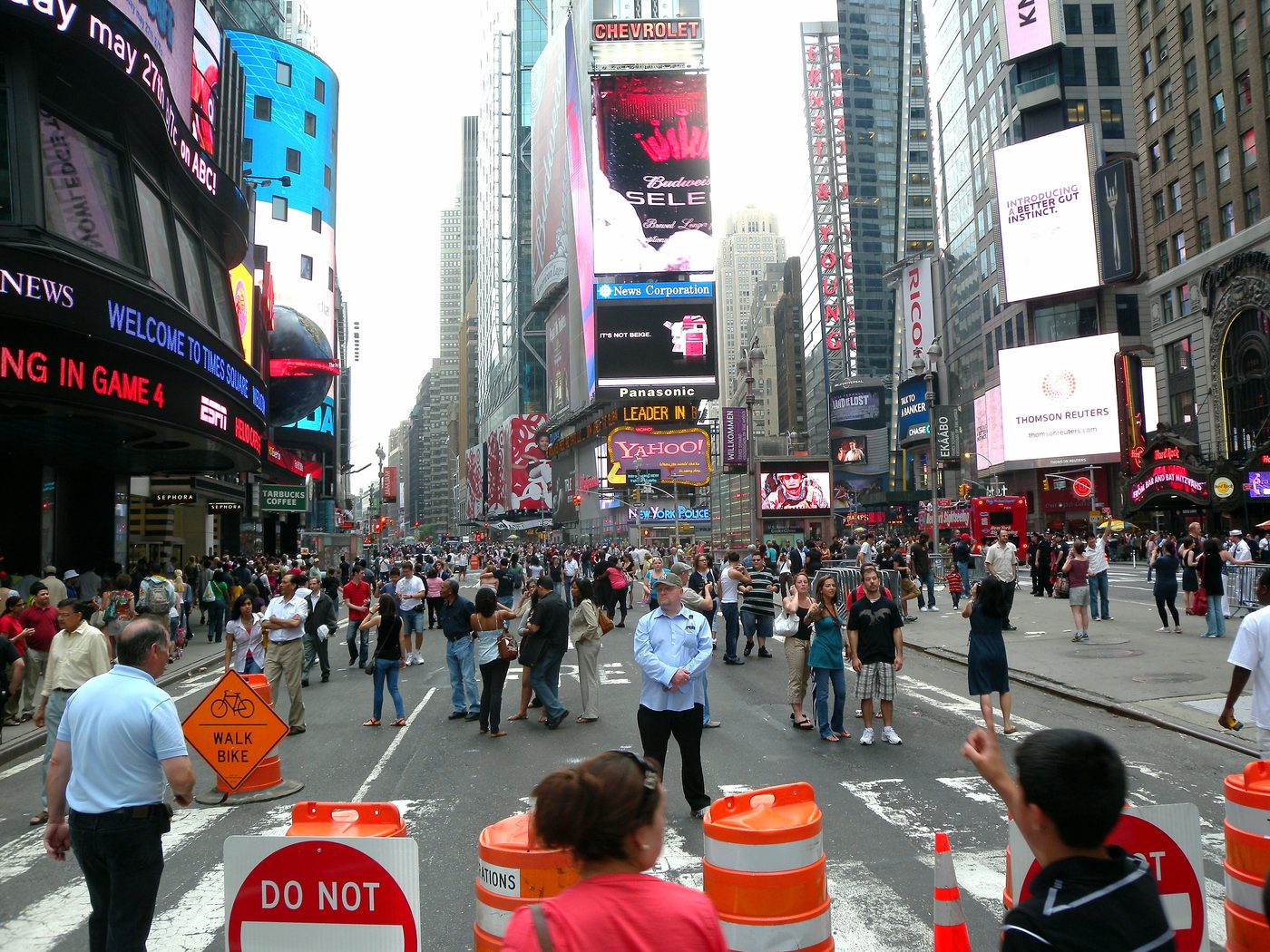
When this hubris met the real world during the post-war era of Urban Renewal, the results were catastrophic. Billions of dollars in federal capital were spent executing irreversible master plans that cleared hundreds of thousands of homes, severed thriving commercial cores with elevated highways, and replaced organic, human-scaled streetscapes with sterile, concrete superblocks. The planners of that era were not lacking in data, technical certainty, or legislative authority. What they lacked was humility. They possessed no mechanism for testing their assumptions at a modest scale, no process for discovering error before the concrete was poured, and no institutional capacity to change course once the bulldozers were unleashed. They placed massive, all-or-nothing bets with public funds and human lives, and when their grand hypotheses proved disastrously wrong, the city paid the price in decades of physical ruin, racial segregation, and social trauma.
Chastened by that catastrophe, the modern planning profession swung violently to the opposite extreme. Paralyzed by the memory of mid-century destruction, contemporary planners constructed an elaborate apparatus of defensive avoidance. Rather than risk making a bold mistake, the discipline developed a procedural obsession with perpetual study.
Today, if a municipality wishes to make even a modest improvement to its public realm (such as repurposing a redundant travel lane on a commercial avenue for a protected bikeway, or transforming a blighted asphalt triangle into a neighborhood gathering space), it enters a procedural purgatory that lasts for years. The city commissions a multi-phase existing conditions study. It hires specialized consultants to run complex microsimulation traffic models to determine whether shifting fifty feet of asphalt will alter the level of service at an intersection three miles away. It conducts twelve months of preliminary scoping, publishes an exhaustive environmental review document that spans hundreds of pages of legal boilerplate, convenes a dozen sparsely attended stakeholder charrettes, and drafts a comprehensive corridor master plan. By the time the plan is formally adopted by the city council, four years have evaporated, several hundred thousand dollars in public funds have been paid to consulting firms, the political champions who initiated the idea have left office, and the local merchants and residents who needed immediate relief have succumbed to cynical despair. And even then, after years of paper compliance, not a single shovelful of dirt has been turned, and no one truly knows whether the design will work in the messiness of real life.
The practice of civic craft rejects both the destructive arrogance of mid-century clearance and the cowardly paralysis of modern procedure. In their place, we must recover the courage to test.
The courage to test is an operational commitment to humble, empirical action. It recognizes that the human city is a complex, adaptive organism that does not yield its secrets to theoretical models or computer simulations. The only way to truly understand how human beings will inhabit a physical space, how a commercial district will adapt to a shift in mobility, or how a neighborhood will respond to a new civic asset is to test the idea directly in physical reality.
Instead of committing millions of dollars in permanent capital to unproven, contentious assumptions based entirely on paper studies, the planner must learn the discipline of rapid, real-world civic experimentation. If a broad, dangerous commercial avenue suffers from speeding traffic and struggling storefronts, the practitioner does not wait three years for a federal transportation grant to begin studying the corridor. The planner works with the public works crew to put down temporary striping, uses hay bales, potted planters, and modular wooden benches to create a temporary curb extension, adjusts the traffic signal timing for thirty days, and invites food trucks and street vendors into the newly created public space.
This immediate, tactile intervention transforms the entire civic dynamic. It de-risks the municipal imagination. It shifts the debate from the realm of speculative fear to the realm of empirical experience. At traditional public hearings, opponents of change present catastrophic predictions: traffic will back up for miles, emergency vehicles will be blocked, and businesses will immediately fail. But when an idea is tested on the ground with temporary materials, the community does not have to argue over abstractions. They can walk the street, observe the traffic with their own eyes, watch their children play in the temporary plaza, and speak directly with the local coffee shop owner to see if foot traffic increased or declined.
Crucially, the courage to test grants the municipal servant permission to learn from failure. In the traditional planning regime, failure is a bureaucratic catastrophe because it occurs at the end of a multi-million-dollar, multi-year procurement process, after concrete has been cast and bonds have been issued. But in an agile civic experiment, discovering that a design element does not work is an inexpensive, invaluable insight. If delivery trucks struggle to navigate a temporary turning radius, or if pedestrians fail to use an experimental crosswalk, the planner does not face an administrative crisis. The paint is scrubbed away, the planters are repositioned, the curb line is adjusted on Tuesday morning, and the experiment continues.
Testing ideas in physical reality transforms citizens from a cynical audience into active stewards of their shared public realm. It builds public trust because it demonstrates that local government is capable of responsive, tangible action rather than endless, empty rhetoric. It replaces the paralyzing fear of error with the healthy discipline of discovery. The courage to test does not abandon long-range capital planning; it provides capital planning with its only reliable foundation. When a city finally commits its permanent bonding capacity to reconstruct a boulevard or build a new civic square, it does so not on the basis of a consultant's theoretical projection, but on the unassailable ground of real-world evidence, forged through the patient, courageous act of testing in the light of day.
The Discipline of Critique: Ending the Cycle of Erasure
Beneath the procedural stagnation of modern municipal government lies a deeper, more insidious pathology that cripples the effectiveness of local planning: the institutional amnesia that borders on administrative negligence. In municipal departments across the United States, planning is practiced as an endless, amnesiac cycle of replacement. Every fifteen to twenty years, a city council passes a resolution declaring that its existing comprehensive plan is obsolete. The city issues a request for proposals, appropriates hundreds of thousands of dollars from the general fund, and hires a national planning consultancy to produce a new master document.
The consultants arrive, convene a fresh series of public workshops, set up interactive digital surveys, and invite residents to imagine their city on a clean, pristine whiteboard. An entirely new set of aspirational visions, comprehensive goals, and strategic objectives is cataloged. A lavish, four-color publication is designed, celebrated at a televised council meeting, formally adopted, and placed upon the shelf directly adjacent to the previous comprehensive plan, which sits unopened, unexamined, and completely forgotten.
This endless cycle of erasure is a monumental betrayal of public trust and a staggering waste of civic capital. It treats the city as an etch-a-sketch, shaking the screen clean every two decades to give the illusion of fresh progress while perpetually avoiding the hard, necessary work of institutional accountability. It is the ultimate symptom of a brittle bureaucracy: a system that is constantly reinventing the wheel precisely because it lacks the courage, the humility, and the memory to learn from its own past.
The first act of civic craft begins not with a blank page, but with an audit of history. The true artist understands that no enduring work of art, no lasting monument, and no great civic institution was ever created by pretending the past did not exist. A great architect does not design a building by ignoring structural physics and the history of construction; an author does not write a novel by renouncing the accumulated literature of the language. In the same manner, the civic servant who aspires to see the city whole must begin by becoming a rigorous, uncompromising historian of past municipal failures.
The first meeting convened to initiate a new comprehensive plan should never begin with a blank whiteboard and the comfortable, speculative question: "What is our grand vision for the future?" It must begin with the previous master plan placed squarely in the center of the table, flanked by the city’s actual capital budgets, zoning maps, and social outcomes. Civic craft initiates the process with a series of uncomfortable, searching questions: What did we promise this community twenty years ago? Which policies did we actually codify into our municipal ordinances, and which did we quietly abandon the moment political resistance emerged? How much capital did our budget office allocate to the infrastructure projects promised to the working-class neighborhoods on the east side of the tracks, compared to the investments made in the affluent commercial corridors? Where did our analytical forecasts prove disastrously wrong, which economic assumptions collapsed, and who bore the physical, financial, and emotional burden of those institutional failures?
Civic craft initiates the process with a series of uncomfortable, searching questions: What did we promise this community twenty years ago?
This discipline of critique is not an academic post-mortem, nor is it an exercise in cynical blame-casting. It is a practical, moral necessity. It is the indispensable labor of building institutional memory. When a city government develops the institutional maturity to conduct an honest audit of its broken promises, it achieves two transformative outcomes.
First, it breaks the cycle of repetition. A municipal bureaucracy that honestly examines why its previous affordable housing overlay zone failed to produce a single deed-restricted unit will not make the foolish mistake of passing another toothless, voluntary incentive program. A transit authority that investigates why its expensive bus-rapid-transit corridor lost ridership will discover that the failure lay not in passenger disinterest, but in the political cowardice that watered down dedicated bus lanes and preserved street parking for influential business owners. Critique extracts the hard, gold-bearing ore of wisdom from the slag heap of past errors.
Second, and perhaps more importantly, the discipline of critique begins to repair the ruptured bond of trust between local government and the governed. When long-time residents attend a municipal planning meeting, they do not arrive as blank slates. They arrive bearing the living memory of every broken commitment, every unpaved sidewalk, every deferred park renovation, and every manipulative charrette their neighborhood has endured over three generations. When a planner stands before them with cheerful corporate optimism and asks them to dream about the next twenty years without acknowledging what happened over the last twenty, the community recognizes the performance for what it is: administrative gaslighting.
Trust is never built on performative cheerfulness; it is built on radical honesty. When a city planner has the courage to stand before a neighborhood and say, "We have read the 1995 plan, we have examined the budget records, and we acknowledge that the city failed to deliver the drainage improvements and the community center we promised your parents; here is precisely why that failure occurred, and here is how we intend to legally bind ourselves so it cannot happen again," the room shifts. Cynicism gives way to cautious engagement. By submitting its own past to ruthless critique, local government earns the moral credibility required to ask a community to believe in the future once again. This institutional reckoning connects to a growing literature on reparative planning, which asks planners to examine how past public decisions shaped present-day racial and spatial inequities, and to address those harms directly in future plans (Williams, 2024; Goetz, Williams, and Damiano, 2020).
Reclaiming the Civic Academy
If the Artist’s Method is to become an enduring reality rather than an ephemeral theory, it cannot remain confined to the heroic efforts of a few isolated practitioners or visionary city managers. It must be institutionalized. It must be built into the professional machinery that trains the minds, shapes the ethics, and sets the standards for the entire planning profession. And that work must begin within the university.
For more than half a century, the American planning academy has been complicit in the profession's slow drift into irrelevance. Following the social upheavals of the 1960s, planning schools systematically dismantled the physical design studio. In their rush to be recognized as serious, quantitative social scientists, planning faculties severed their ties to architecture, landscape design, and physical construction. They staffed their departments with economists, political scientists, and sociological theorists who had never drafted a spatial plan, never navigated a hostile city council hearing, and never faced the heartbreaking trade-offs of municipal governance.
The curriculum shifted entirely from the practical art of shaping the physical city to the detached critique of social systems. Today, students graduate from the nation's most prestigious master’s programs equipped with an encyclopedic vocabulary of critical theory, capable of deconstructing the neoliberal political economy of the city in breathtaking academic prose, but utterly incapable of reading a grading and drainage plan, designing a workable urban street section, conducting an honest capital budget reconciliation, or facilitating a contentious meeting of angry homeowners without surrendering to tears.
This educational deformity has created a tragic chasm between the academy and the street. We are sending young, idealistic public servants into the field armed with critical scalpels to dissect the city's wounds, but without a single needle, thread, or splint to help heal them.
The recovery of the lost art of the plan demands a sweeping, uncompromising revolution in planning education. We must restore the civic studio to the absolute center of the planning curriculum. But this restored studio must not be a nostalgic retreat to the Beaux-Arts drafting tables of the nineteenth century, where students drew imperial boulevards and monumental plazas that ignored the realities of race, class, and economic power.
The studio of the twenty-first century must be a rigorous laboratory of civic craft. It must be an immersive environment where students are required to master the four disciplines of the Artist’s Method simultaneously.
In this restored academy, students must spend their first semester not in an econometric lecture hall, but in the neighborhood, practicing the discipline of witness under the guidance of seasoned community elders and front-line public servants. They must be trained in the art of moral synthesis, learning to weave hydrology, zoning codes, municipal debt structures, and racial histories into a single, coherent spatial tapestry. They must be pushed out onto the pavement with paint, wood, and temporary barriers, learning the courage to test by designing and executing real-world urban prototypes that are tested and critiqued by actual citizens. And they must be taught the discipline of institutional memory, conducting forensic audits of historical plans to understand how good intentions routinely curdle into administrative violence when divorced from political realism and fiscal discipline.
We must insist that the planning academy value the practitioner as highly as the theorist. A planning school that does not feature seasoned city managers, veteran zoning administrators, and fearless neighborhood advocates on its core faculty is as absurd and dangerous as a medical school that refuses to employ practicing surgeons.
When the university reclaims planning as a noble, creative craft, it will cease to produce risk-averse bureaucrats whose only instinct is to hide behind procedural checklists. It will begin to graduate a new generation of civic artists: public servants who possess the technical competence of the engineer, the analytical rigor of the economist, the moral witness of the social reformer, and the creative audacity of the master builder. Armed with this rediscovered inheritance, they will step into the fractured halls of local government, cast aside the sterile habits of the past, and take up the long, beautiful, and necessary work of seeing the city whole.
Take up the long, beautiful, and necessary work of seeing the city whole.